Neural Network
Computing systems inspired by biological neurons that learn patterns from data.
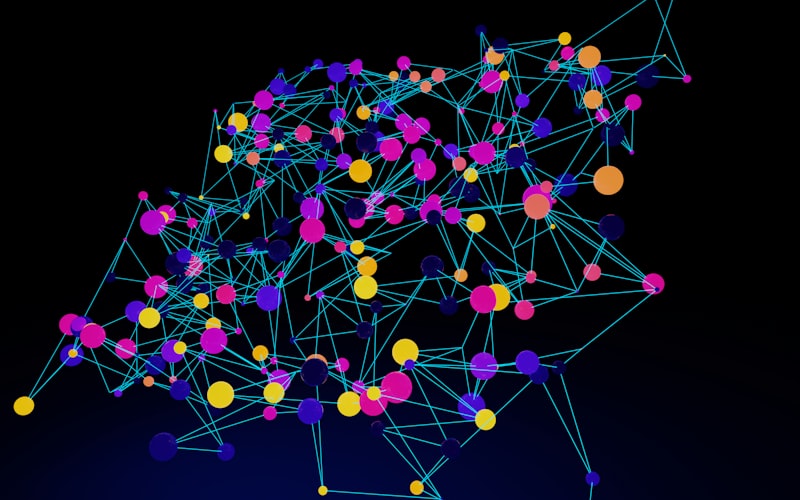
Neural Network
/ˈnjʊərəl ˈnɛtˌwɜːrk/
Neural Network: A sophisticated computing architecture inspired by biological synaptic pathways, designed to identify complex patterns and orchestrate autonomous decision-making. In the Blue Note Logic framework, these networks serve as the "rhythm section" of modern enterprise AI.
The 2026 Standard: From MLPs to KANs
While traditional Multi-Layer Perceptrons (MLPs) served as the standard "playback" models for decades, 2026 marks the widespread adoption of Kolmogorov-Arnold Networks (KANs). Unlike MLPs with fixed activation functions, KANs utilize learnable activation functions on the edges (splines), offering a degree of interpretability akin to reading a musical score. This "High-Retro-Tech" approach allows Blue Note Logic to deliver models that are 10x more parameter-efficient and fully auditable.
- Convolutional Neural Networks (CNN): The "Visual Eyes" of the ensemble; optimized for spatial patterns and computer vision.
- Recurrent Architectures (RNN/LSTM): The "Temporal Memory"; handling sequential data rhythms such as speech and time-series forecasting.
- Liquid Neural Networks: Adapting to new data streams in real-time—perfect for edge computing in the Nordic industrial sector.
The Blue Note Logic "Jazz" Perspective
At Blue Note Logic, we treat neural training as improvisational logic. We don't just optimize for accuracy; we optimize for Harmonic Resonance—ensuring the model's output aligns with human strategic intent and ethical guardrails. Our "US-Norway" dual-presence allows us to blend aggressive American scaling with elegant, design-conscious European interpretability.